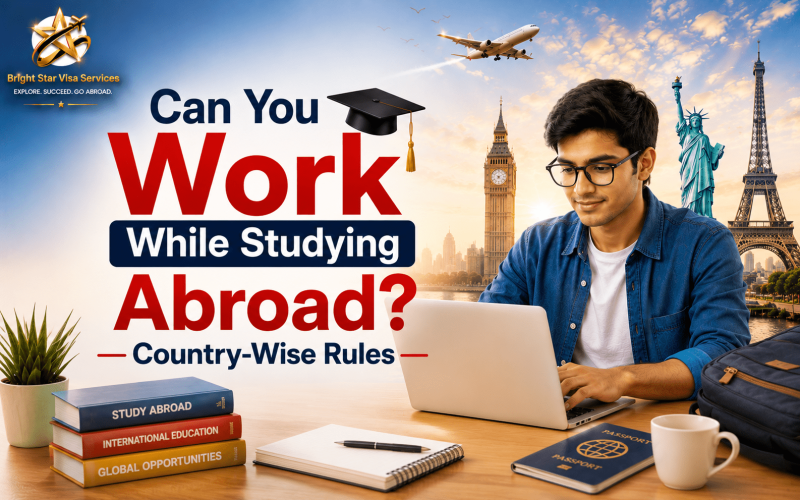
Studying in another country is something that many students aspire to, but paying tuition, living expenses, and daily costs can prove to be difficult. The good news is that foreign countries allow students to work part-time while studying. Working while studying not only enables you to earn enough to pay for living costs but also teaches you valuable skills and introduces you to the world of work. However, every country has certain restrictions regarding the working hours for students, as well as the eligibility requirements.
With this resource, Bright Star Visa, the best Visa consultant in Dubai and Abu Dhabi, explains whether you can work while studying abroad and the work rules in some of the most popular study destinations.
Country Wise Work Rules
1. Canada
Canada is one of the most popular destinations for international students because of its student-friendly work policies. International students enrolled at eligible designated learning institutions (DLIs) can generally work:
- Up to 24 hours per week off-campus during regular academic sessions (subject to current immigration rules).
- Full-time during scheduled breaks, such as summer and winter holidays.
- On-campus without a separate work permit if they meet eligibility requirements.
Many students with Canada student visas find jobs in retail, restaurants, customer service, libraries, research departments, and administrative offices. Canada also offers excellent post-graduation work opportunities through the Post-Graduation Work Permit (PGWP), making it attractive for students planning long-term careers.
2. Australia
While studying abroad, international students with Australian student visas can work. In general, international students can:
- Work up to 48 hours in two weeks while they are studying;
- Work without limits when official breaks from their classes are in session.
Among the most popular student jobs are those in hospitality, retail, delivery, customer service, etc.
3. United Kingdom
The UK permits many international students to work while pursuing higher education. Students studying full-time at eligible institutions are generally allowed to:
- Work up to 20 hours per week during term time.
- Work full-time during university vacations.
Students with UK student visa commonly work in:
- Cafes and restaurants
- Supermarkets
- University libraries
- Administrative offices
- Hospitality businesses
However, students cannot usually work as self-employed individuals or take permanent full-time jobs while their course is in session.
4. United States
International students in the USA have more structured work regulations. During the first academic year:
- Students on an F-1 visa can generally work on-campus for up to 20 hours per week.
- During holidays, they may work full-time on campus.
After meeting eligibility requirements, students may qualify for:
- Curricular Practical Training (CPT)
- Optional Practical Training (OPT)
These programs students with a USA student visa can gain valuable industry experience related to their field of study.
5. Germany
Germany is another excellent destination for international students seeking affordable education and work opportunities. International students can generally work:
- Up to 140 full days or 280 half days per year (or under updated equivalent hourly regulations where applicable).
- Many students also work as student assistants (HiWi) within universities.
Common jobs include:
- Retail
- Warehouses
- Cafés
- Research assistants
- Office support
Germany’s strong economy provides numerous opportunities for graduates after completing their studies.
6. New Zealand
New Zealand allows eligible international students to work while studying. Typically, individuals with New Zealand Student Visa may:
- Work up to 20 hours per week during study periods.
- Work full-time during scheduled holidays.
Popular sectors include:
- Tourism
- Hospitality
- Agriculture
- Retail
- Customer service
The country also provides several pathways for skilled graduates to remain and work after graduation.
7. Ireland
Ireland has become a popular destination because of its growing technology sector.
International students can usually:
- Work up to 20 hours per week during academic sessions.
- Work up to 40 hours per week during designated holiday periods.
Many students find employment in:
- Retail
- Hospitality
- Customer service
- Warehousing
- IT support roles
Ireland also offers post-study work options for eligible graduates.
Tips For Working While Studying Abroad
Before accepting any job, consider these important tips:
- Always check the work conditions attached to your student visa.
- Ensure your employer follows local labor laws.
- Never exceed the permitted working hours.
- Balance work and academics to maintain good academic performance.
- Keep copies of employment contracts and tax documents.
- Focus on gaining skills that support your future career.
Following immigration rules is essential, as violating work conditions could affect your visa status.
Can Working Help You Stay After Graduation?
In several countries, practical experience acquired while studying helps you get employed once you complete your education. Countries like Canada, Australia, Germany, Ireland, and New Zealand provide their students with opportunities to earn money while acquiring practical experience after their graduation from the university. In addition, such practical experience may also help in getting a permanent residence status in the respective country in the future.
Final Thoughts
Working while studying abroad is an excellent opportunity to earn extra income, develop professional skills, and gain international work experience. However, each country has its own regulations regarding work hours, eligibility, and permitted employment. Before applying for a student visa, it’s important to understand the latest immigration rules and ensure you comply with all visa conditions. Proper planning can help you enjoy both academic success and valuable career experience during your time abroad.
If you’re planning to study overseas and need guidance on choosing the right destination, preparing your documents, or applying for a student visa, Bright Star Visa, your trusted Visa consultant in Dubai and Abu Dhabi, can help you with end-to-end visa services.
Frequently Asked Questions
- Can international students work while studying abroad?
Yes. Many countries allow international students to work part-time while studying, but the permitted hours and conditions vary by country and visa type.
- Which country allows the highest work hours for international students?
Work hour restrictions will differ from country to country. In Australia, Canada, the United Kingdom, Germany, Ireland, New Zealand and the USA, among others, there are specific rules that need to be followed.
- Can I work full-time during holidays?
In many countries, eligible international students are allowed to work full-time during official academic breaks or vacation periods, subject to visa conditions.
- Is working during my studies going to influence my student visa?
As long as you do not exceed the allowed number of hours and do not violate any terms of your visa, you should be fine.
5. Will part-time work help me get permanent residence status?
By itself, part-time work does not provide you with the opportunity to acquire permanent residence status; however, it can be useful when seeking postgraduate work permits in such countries as Canada, Australia, and Germany.